Straighter Smiles
Without the Metal
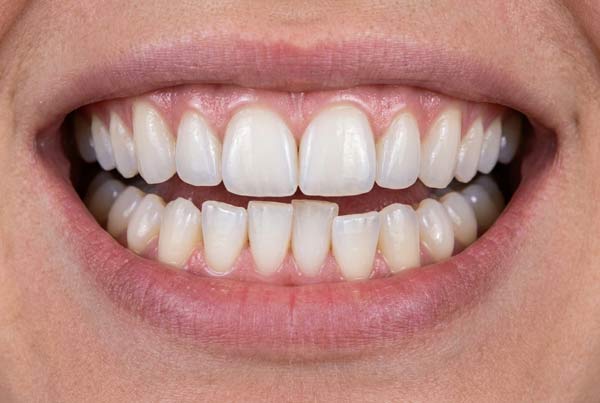
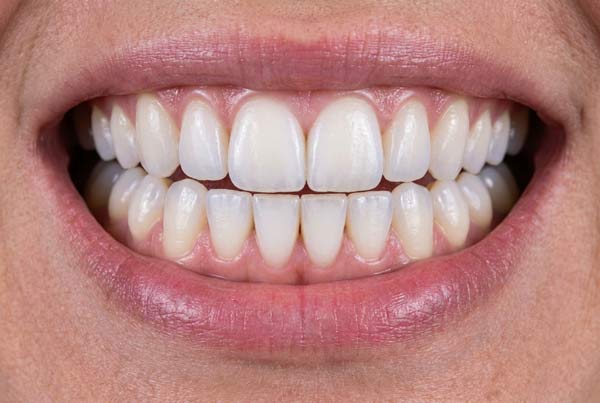
Our patient received orthodontic treatment as a teenager but experienced misalignment over the years due to wisdom teeth crowding and not regularly wearing a retainer. With a combination of orthodontic treatment and veneers, Dr. Goodman was able to realign the patient's smile in just four months.
Clear aligners use a series of smooth aligner trays instead of metal wires and brackets to gently guide your teeth into alignment. A set of trays is worn for about two to four weeks before you switch to the next set. Just like with traditional braces, your doctor will monitor your progress to help you achieve the best results.
Because every patient is different, it is impossible to provide an accurate quote without an initial consultation at our Kansas City dentist. However, we do not want financial barriers to prevent patients from receiving care. Here is how we help:
Our practice accepts most dental insurance plans to help reduce the cost of your treatment. We will verify your insurance coverage before treatment begins so you can accurately budget for any out-of-pocket costs.
Do you not have insurance or need help with costs not covered by your plan? Our Kansas City practice accepts CareCredit. This allows patients to finance the cost of their treatment and break it into affordable monthly payments.
Clear aligner orthodontic systems such as Invisalign can produce beautiful smiles, but they are not for everyone. Treatment at our Kansas City office can improve your health and appearance, but candidacy requirements include:
You Can Commit to Treatment
For clear aligners to be effective, patients must be committed to wearing the trays for a minimum of 20 to 22 hours per day. To ensure compliance, it is recommended that you only remove the trays to eat and maintain oral hygiene.
Mild to Moderate Alignment Issues
Continuing advances in dental technology allow more patients to qualify for clear aligner orthodontics, but severe cases such as rotated teeth, large gaps, and severe malocclusion may require traditional orthodontic options such as braces.
Clear aligner treatment can address a number of orthodontic conditions. There are several instances in which our Kansas City, MO, dentist may recommend orthodontics. Some of the most common orthodontic conditions include:
If the upper jaw is too large, or if the lower jaw is too small, it can cause a deep bite, also known as an overbite. This condition is characterized by front teeth that overlap the lower teeth.
Often caused by an underdeveloped upper jaw or an overdeveloped lower jaw, an underbite causes the lower teeth to jut out in front of the upper teeth.
A crossbite is a condition characterized by horizontal misalignment. This can occur when the uppers overlap the lowers on one side, but the lowers overlap the uppers on the other.
When the front teeth do not come together when biting down on the back teeth, it is referred to as an open bite. This is often caused by childhood habits, such as prolonged bottle use.
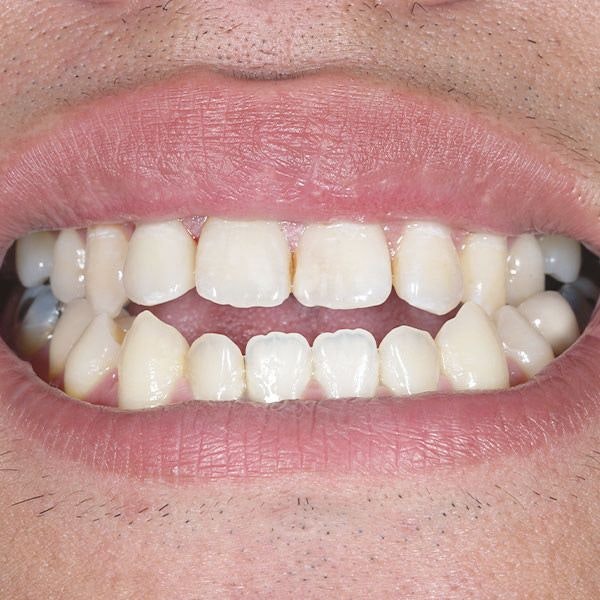
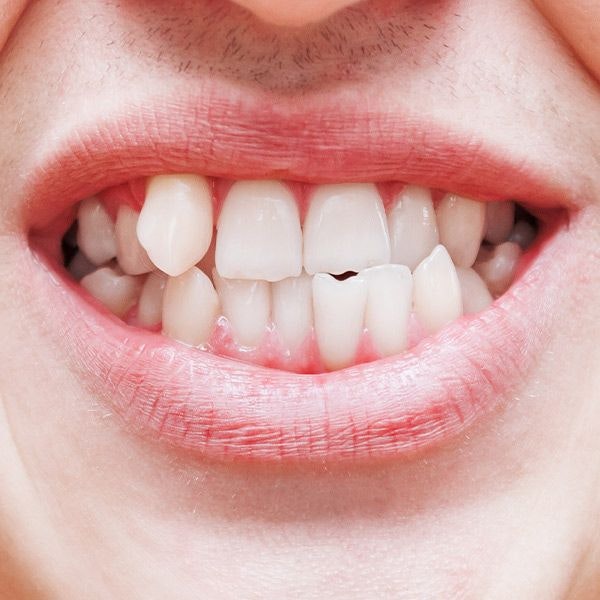
Teeth that are crowded or overlapped can be difficult to clean, leading to issues like decay and gum disease. Orthodontic treatment realigns your teeth so brushing and flossing become easier.
Twisted or rotated teeth can interfere with proper bite function and have a negative impact on your appearance. With orthodontics, we can straighten your smile, restoring function and oral health.
If there are gaps and spaces in your smile, it can affect oral functions like chewing and speaking. Orthodontic treatment can treat gapped teeth and improve your overall oral health.
To determine if you are a candidate for clear orthodontic aligners, Dr. Goodman will conduct a comprehensive consultation at our Kansas City practice. During this visit, he assesses the health of your teeth and gums and checks your bite. If you qualify for treatment, here are the steps you can expect:
We use the latest digital intraoral scanners to create impressions. What does this mean for you? No messy or bad-tasting impression material.
A. No. There may be some mild discomfort while you adjust to your clear aligners, but it should not be painful. If your symptoms are not easily managed at home or if your aligners are causing irritation, please contact our dental practice so we can address your needs promptly.
A. Not necessarily! While an orthodontist specializes in orthodontic treatment, our doctor is trained in comprehensive dentistry. This means you can see Dr. Goodman for all your dental needs and you do not have to visit an orthodontist and a dentist for a full scope of treatment. If you have a particularly complex case, we can refer you to a trusted specialist.
A. There is no minimum age for clear aligner treatment like Invisalign. However, your child must be responsible enough to wear and maintain the aligner trays for the best results. Your doctor will discuss these considerations with you to determine if clear aligners or braces are best for your child.
A. This will depend on the severity of your concerns. Mild issues can sometimes be resolved in as little as 12 months with clear aligner treatment. More extensive issues may take up to 24 months. The average treatment is about 18 months.
A. No. One of the main benefits of clear aligner treatment like Invisalign is that there are no dietary restrictions like there are with braces. Patients just need to remove the aligner trays before eating and put them back in when they are done.
A. To avoid an overly lengthy treatment timeline, it is recommended that patients wear their aligner trays for about 20-22 hours a day. It is best to only remove them when you eat or to clean your teeth and the trays. If you cannot commit to wearing them for the recommended time, traditional braces may be a better option for you.
A. No. Invisalign is simply a brand of clear aligners.
A. Yes. Our doctor suggests wearing a retainer at night after your orthodontic treatment. This will help maintain your results for years to come and prevent your teeth from shifting out of place.
Have more questions about clear aligner treatment?


.jpg?1789670194&auto=format&w=660&h=400&fit=crop&fp-x=0.5&fp-x=0.5&dpr=1&fit=crop)